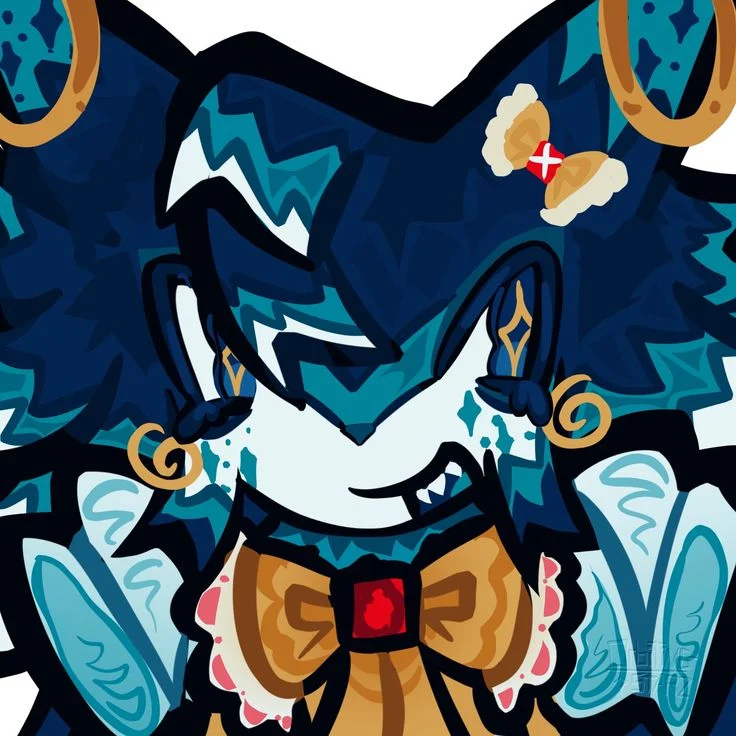
Art is not the easiest subject. At the surface, it may seem easy, but the deeper you go, the harder it gets, but that's what I like about art, and at least I wish to know everything about it, or at least try my best at it. After all, we have one life.
I started at the early age of 1. My drawings were messy and VERY cartoonish. I would usually just copy drawings I would find interesting. When I was 13 or 14, I was still doing cartoonish work because the thought of learning anatomy alone was too hard for me. It wasn't. When I got into high school, I learned it through Wikipedia. I do have to admit my art teacher and friend are here, but again, art depends on YOU. Even if you get feedback/information, it's in vain if you don't practice
The first thing I focused on was geometrical figures: squares, cylinders, triangles, etc. I know they seem easy, but they are very important. You can see geometrical figures everywhere, and it will ease your mind.
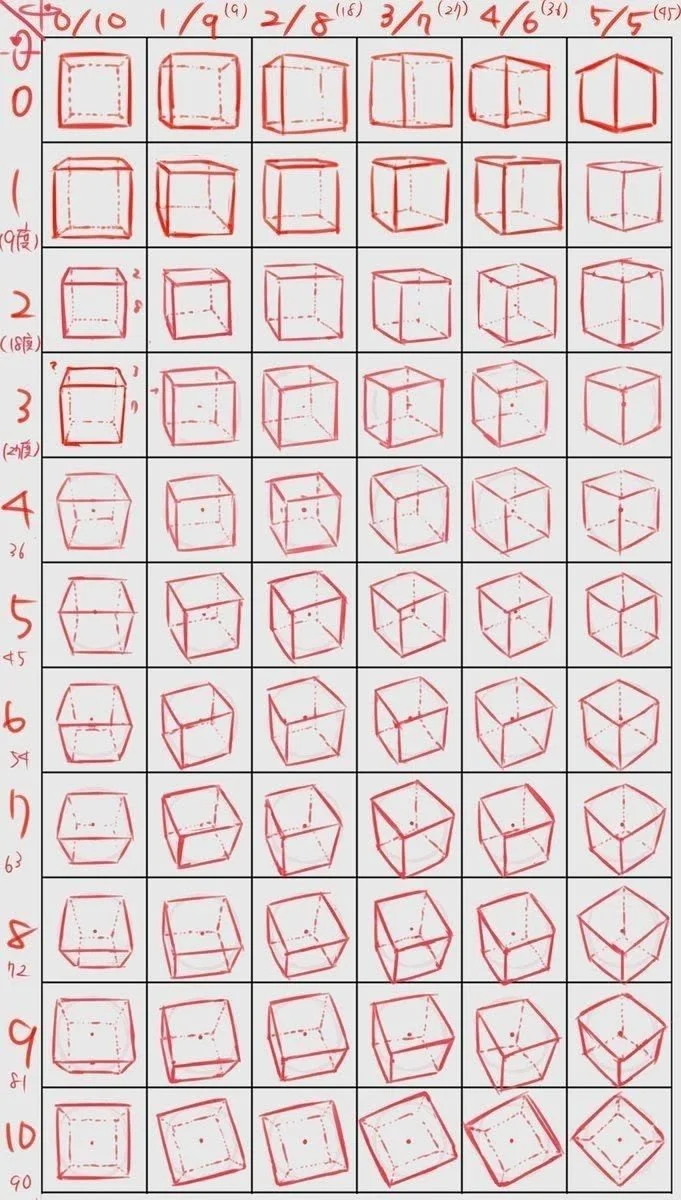
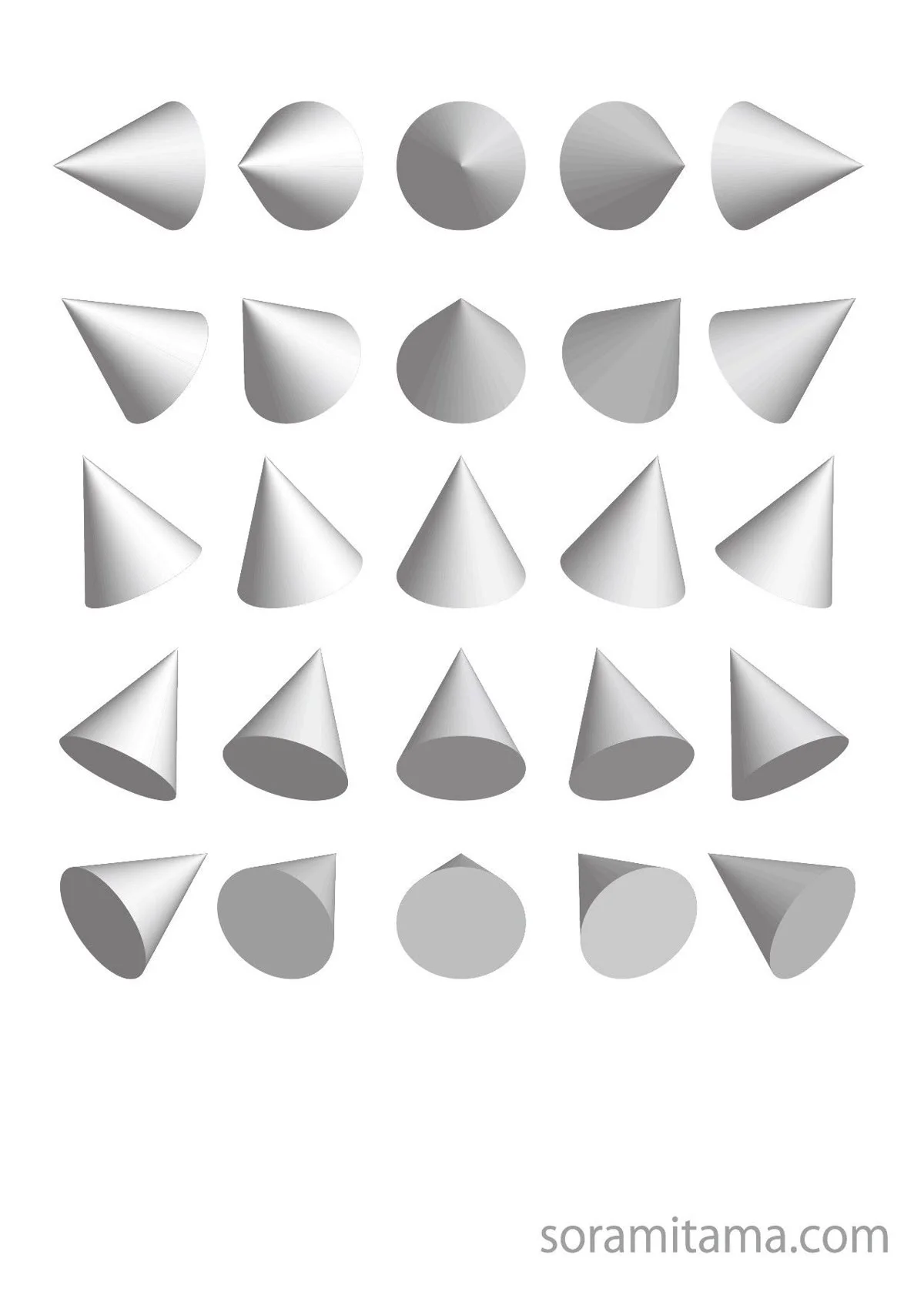
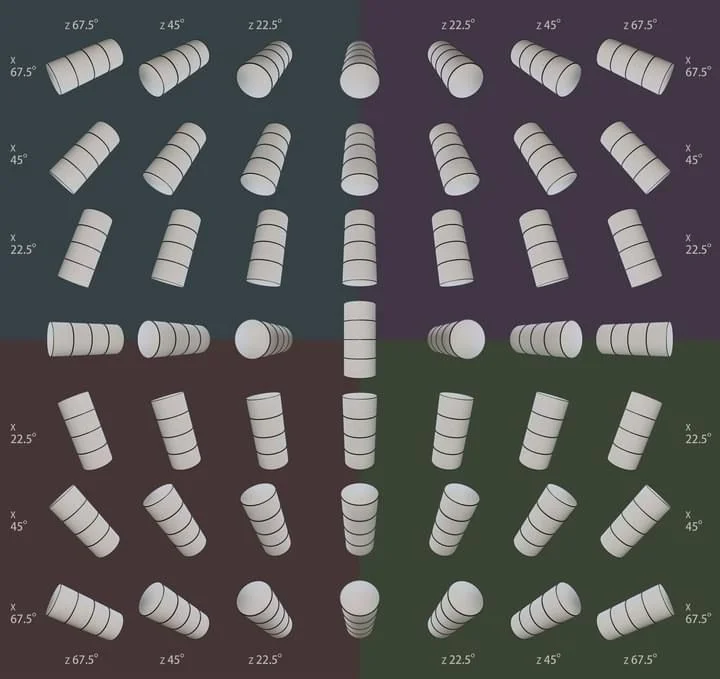
These are just the most common examples that helped me. I used to revise them over and over again.
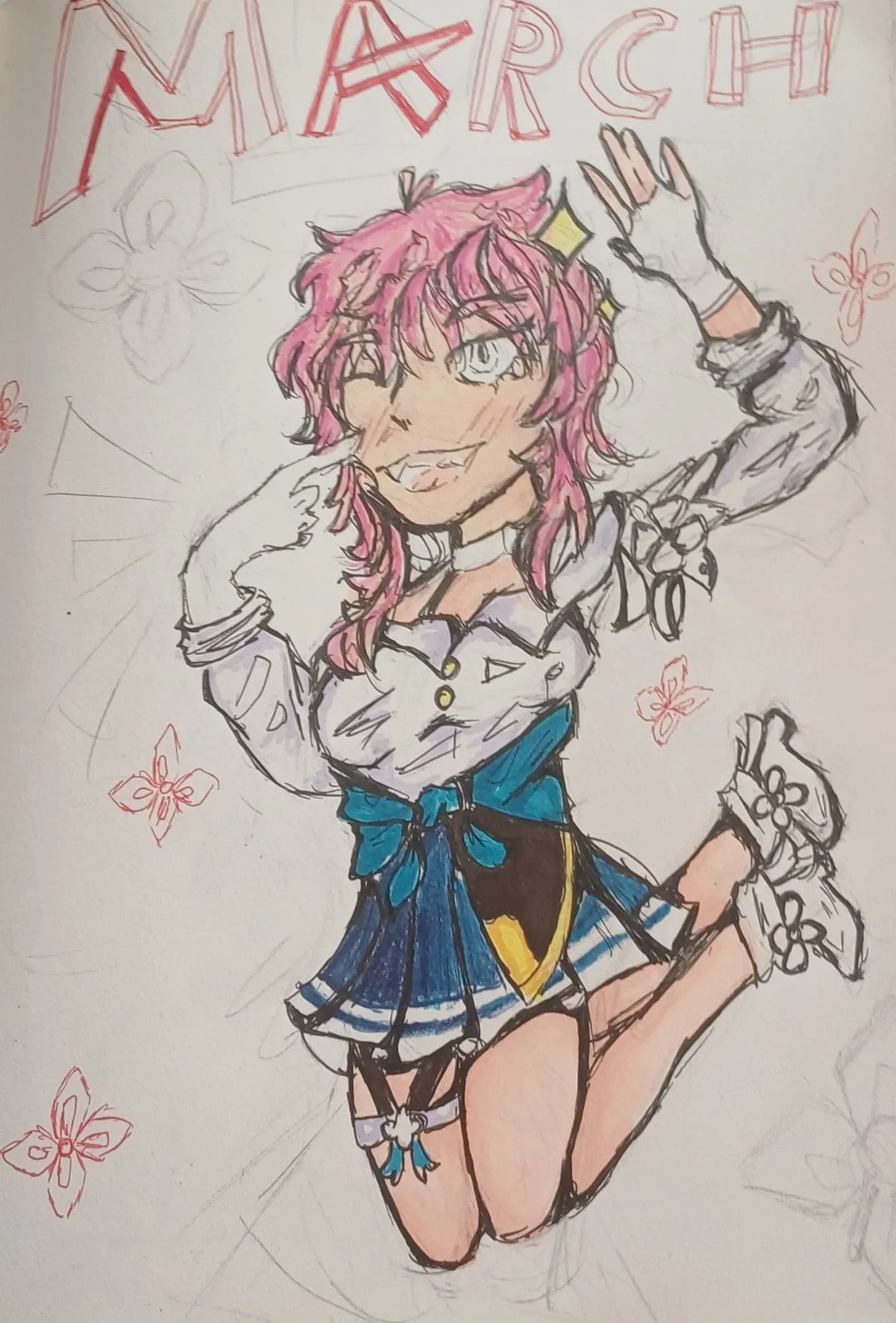
The oldest drawings I could find.
After that, I started working on the skull. I see many people hoping directly into muscles. Please don't make this mistake; the skull and skeleton are the base of anatomy, without them, you can't do pretty much anything. The first time I studied, I tried to get the proportions right, for example, what I used to measure:
1. How many times does the nose fit in the face? Well, usually 3 times, but it can vary depending on the form of the face. Always take measurements of it. When I just started, I wouldn't change this fact because I did not want to complicate things, but when I began working on different skulls/faces, I would shake it up.
2. The jaw is right at the middle of the skull, and you can see that very well on side faces/skulls, even on my early drawing, I would again have this hammered into my brain. Again with the nose, you can shake it up when you reach different shapes of faces.
3. Measure the width of the face/skull into the length of the face (keyword: FACE, not the whole head! )
Those are elementary; they helped me when I first started. You can always have fun and measure for yourself other things you may find weird.
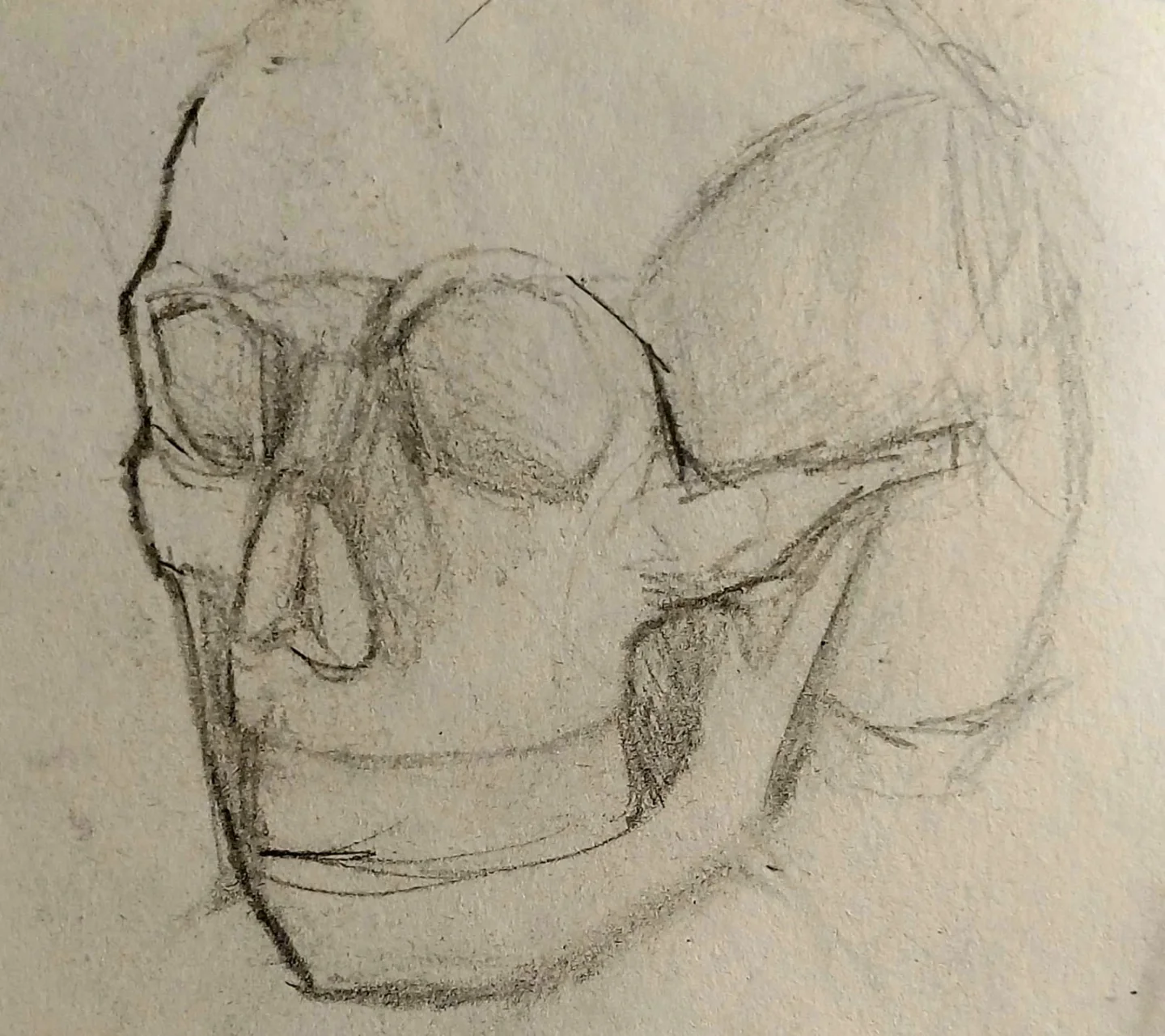
Don't be scared of mistakes; they are the ones that help us evolve. Don't be disappointed if it doesn't look how you wanted or if it is shaky; the more you draw, the more confidence will rise through your sketches and lines.
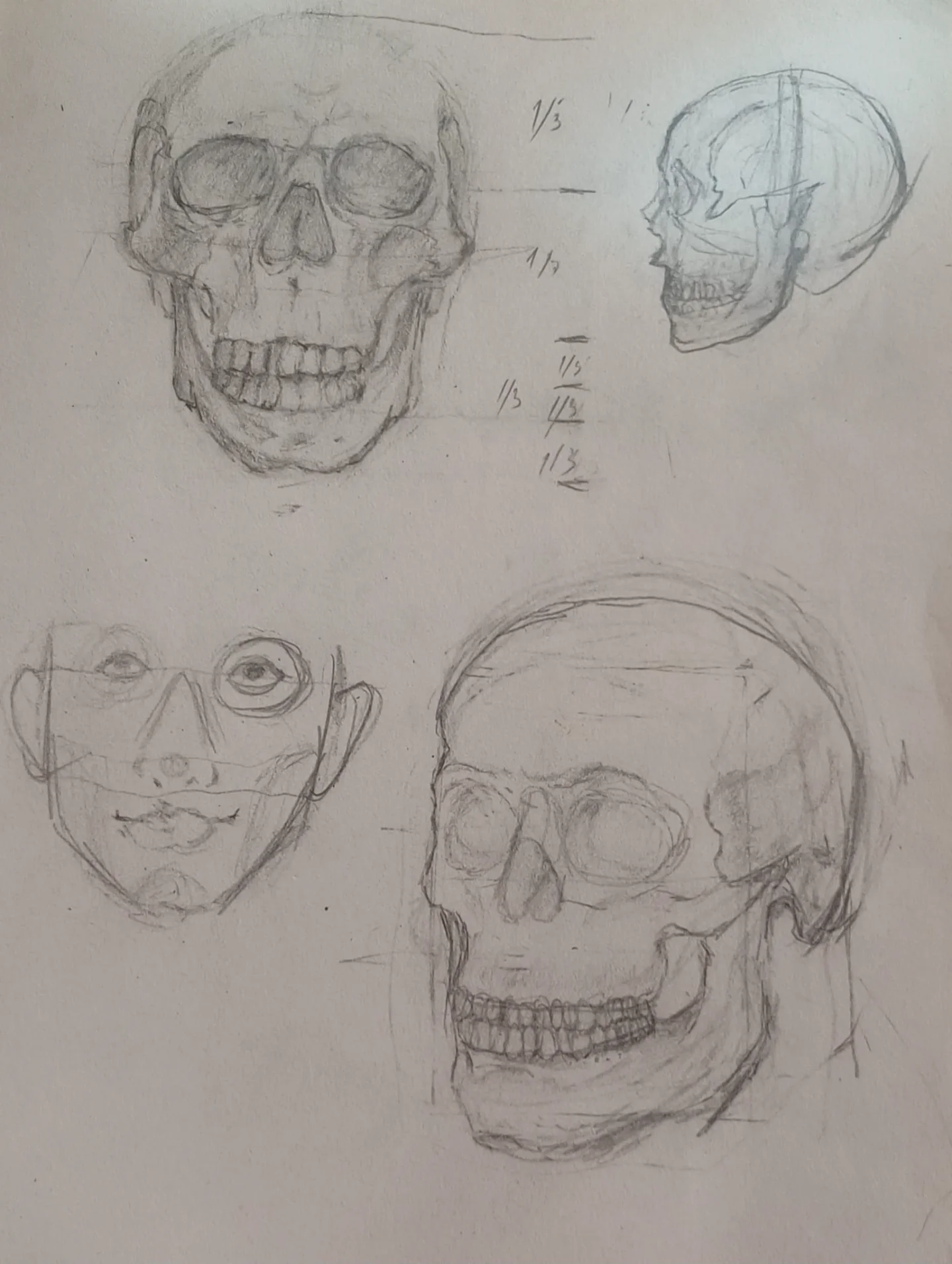
The most important thing that helps me improve, and I'm using it even in the present day for my portraits, is this technique :
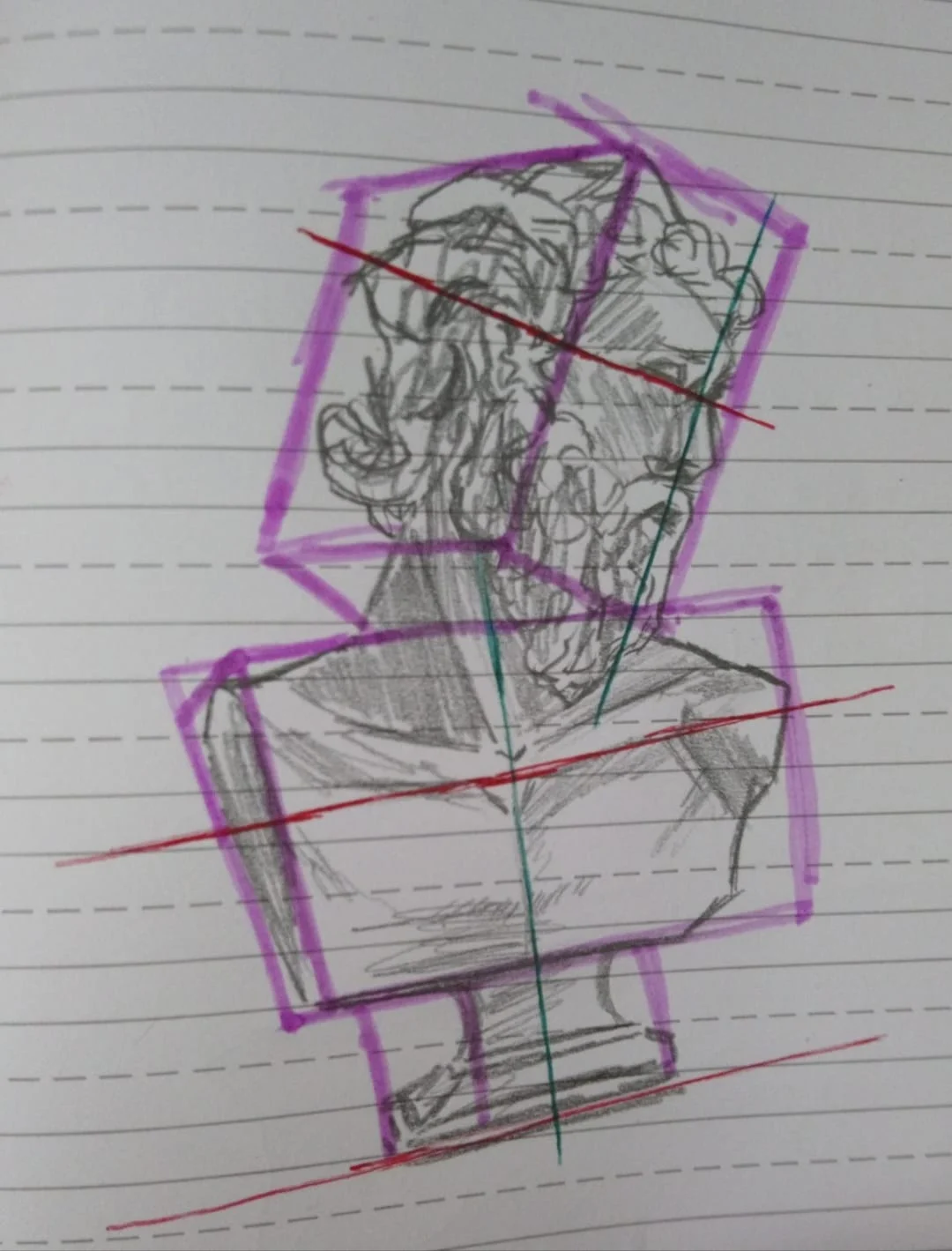
My friend made this to help me, now I'm sharing it here. I hope it helps someone.
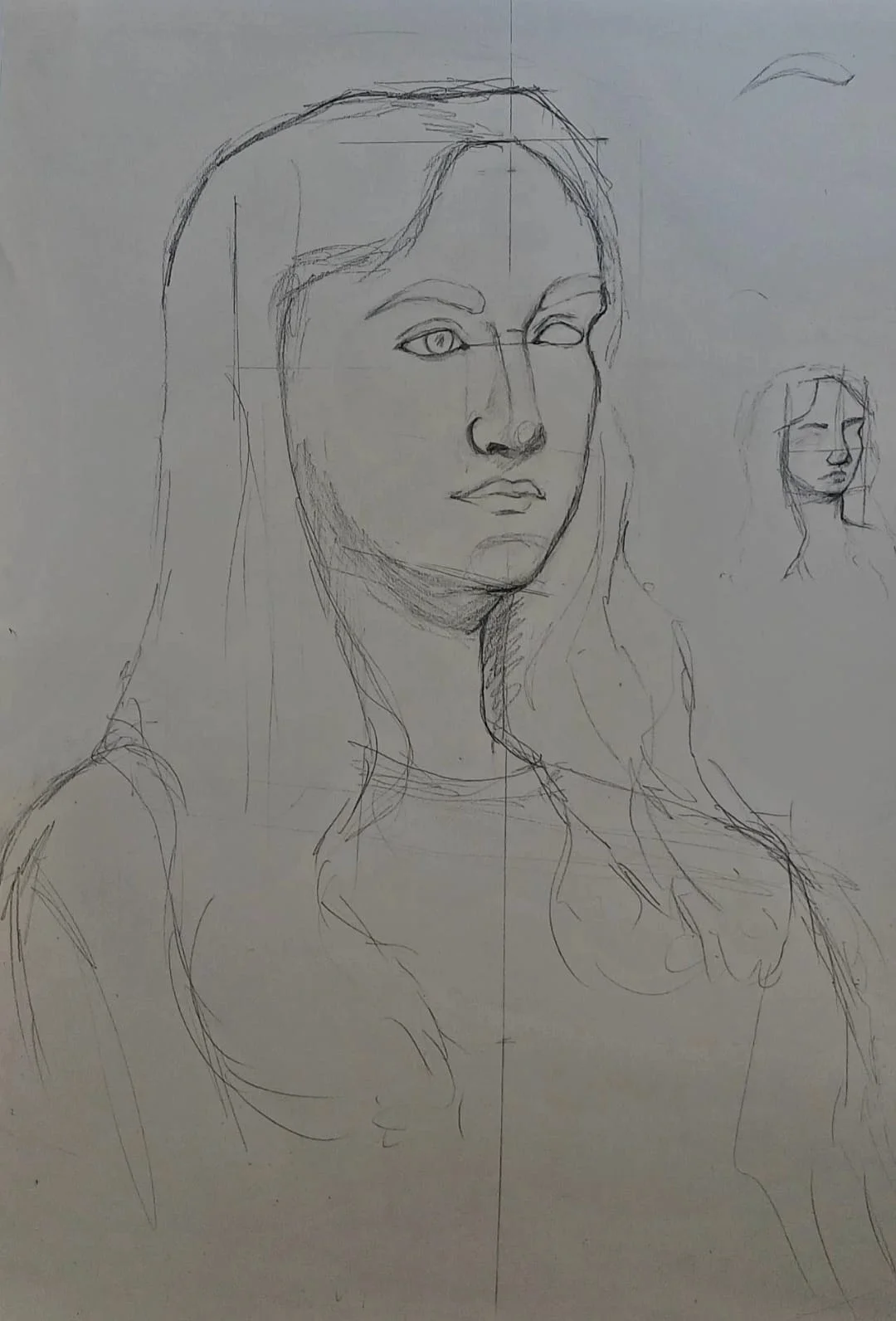
You can see throughout my sketches how much it helps me. For example, last week I made a portrait, you could see the lines of the square and everything on the paper.
The facial features weren't perfect because the person had a slimmer nose, chubbier face, etc. I still struggle with features as I have just started working on them a month ago. But the anatomy is correct, and you can see the lines I made and a little bit of the square for the face. The little sketch was more accurate in terms of the features, but both are anatomically correct!
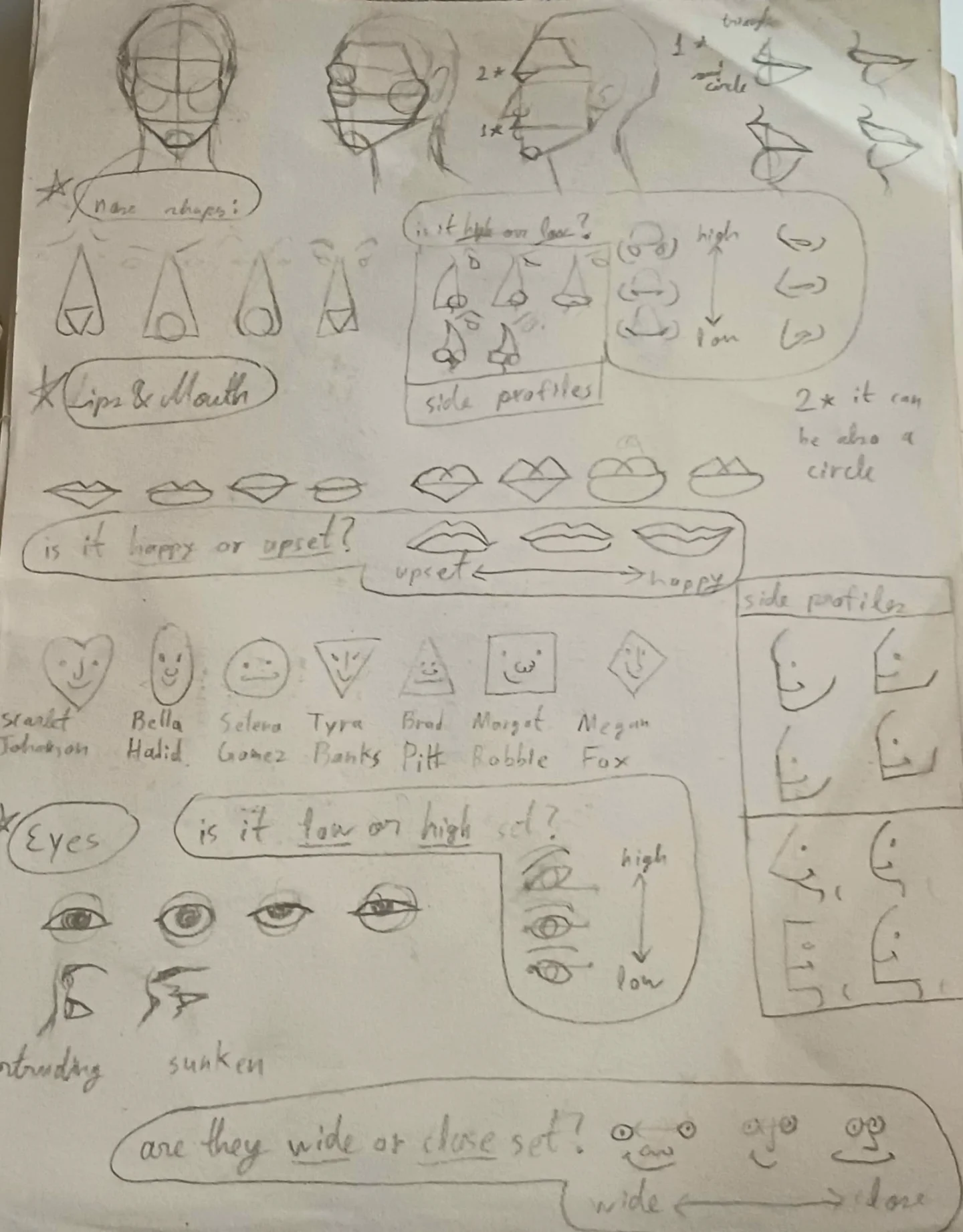
The next image is again made by my friend to help me out with features!
This image is the best tutorial I can ever recommend when it comes to features; it helps me learn and figure out things. I hope it makes sense to you as well.
Always ask yourself these questions:
1. What shape is the nose?
2. Is the nose high or low?
3. Is the lip upset or happy?
4. What form is the lip?
5. What kind of face format do they have?
6. What kind of jaw do they have?
7. Is the corner of the eye higher or lower set?
8. Are the eyes protruding or sunken
9. Is the face wide or close-set?
The skeleton may be hard, but not impossible. If you were to ask me, I would say the face is harder to get a grip on because of the diverse facial features and the vast expressions you can form. Nonetheless, it's not impossible.
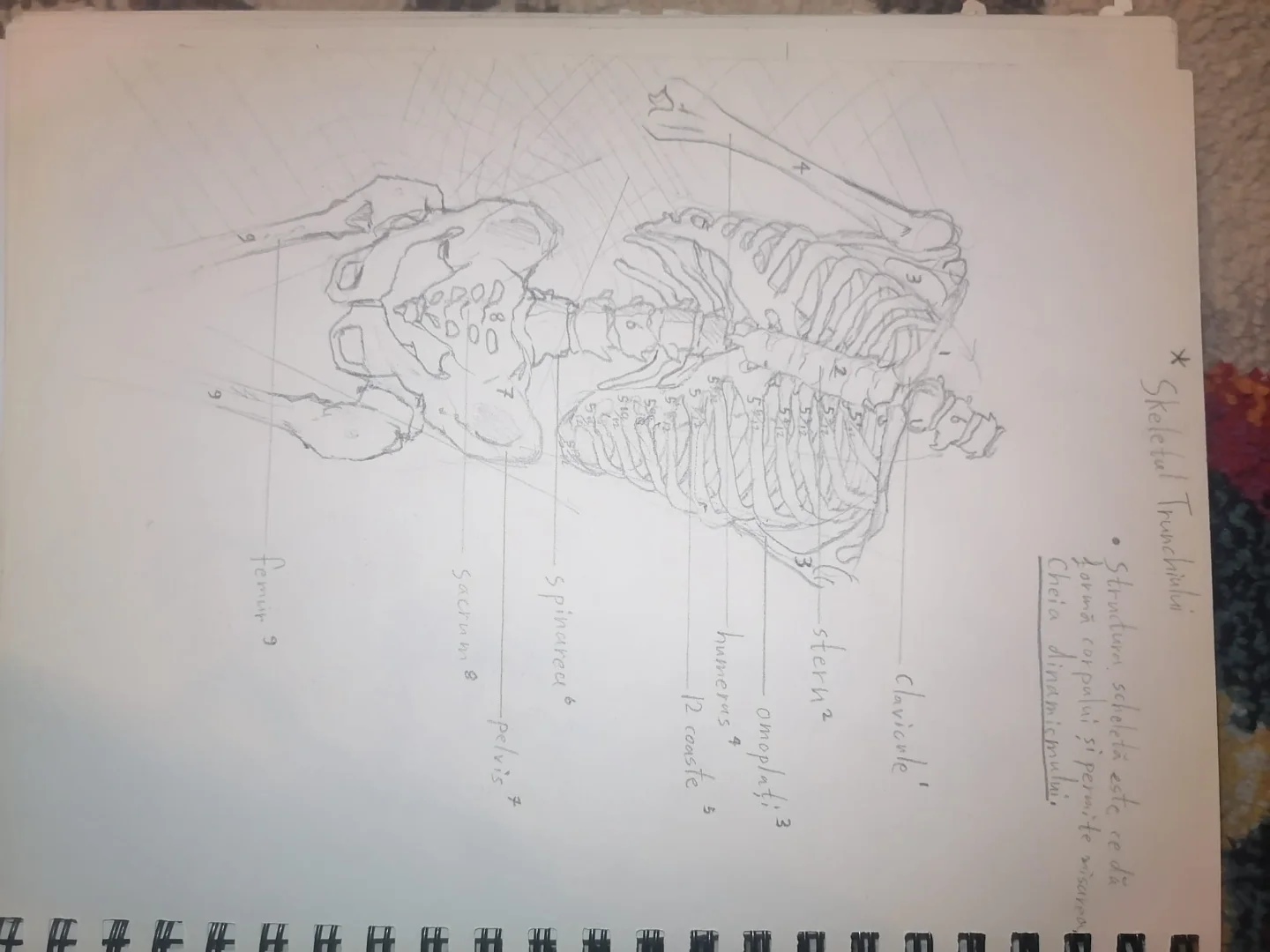
These were my prime references when I first started with the skeleton structure. It did, and it still does help in so many ways.
I lost most of MY studies, even my recent ones, but I did find a few that I can attach down here.
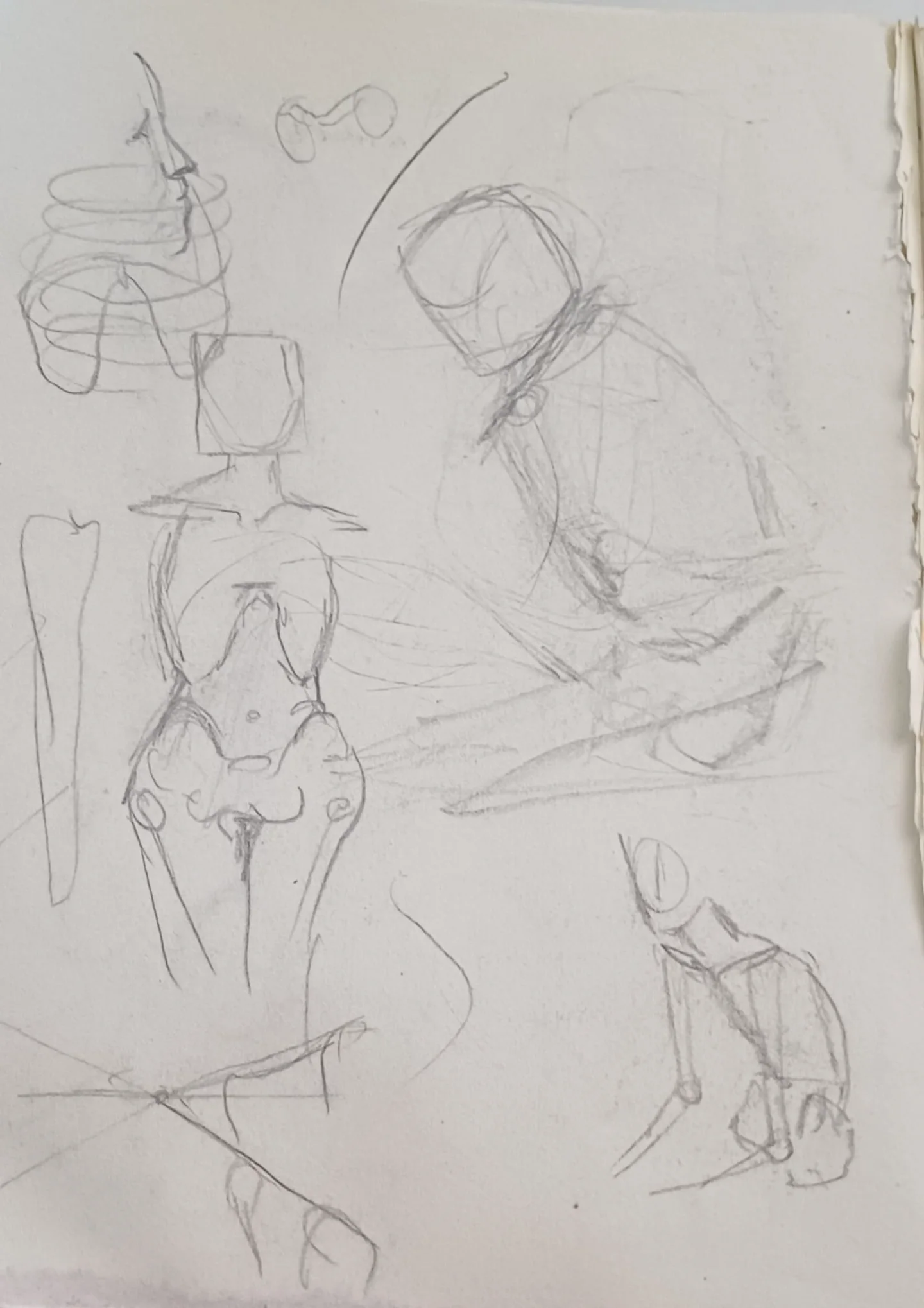
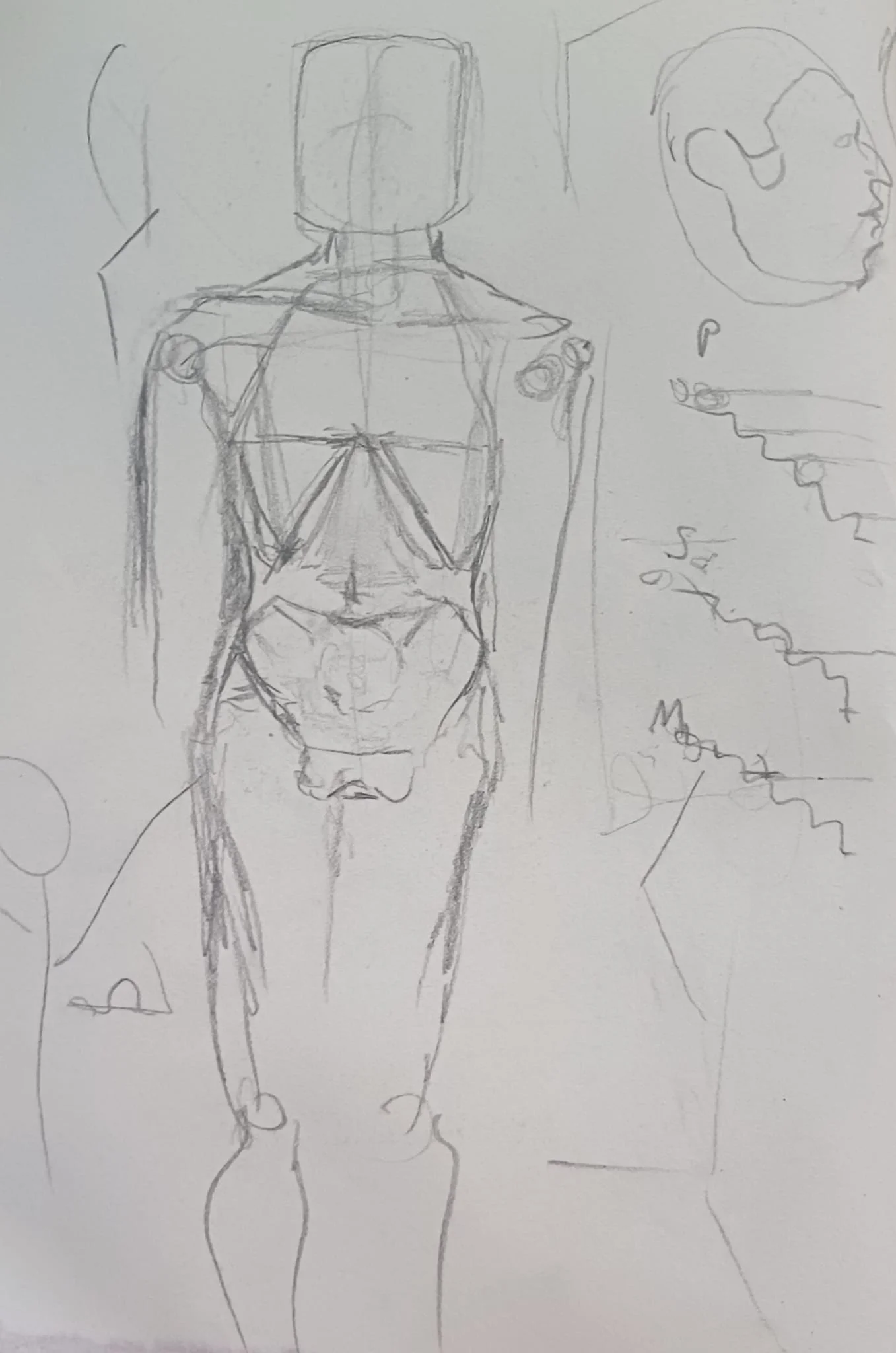
I accept ANY kind of feedback or criticism, so please, if you have something in mind about my art or my writing, do tell me, as I don't bite, and I'm trying every day to evolve in my art.
I will talk about the general stuff; I'm not going to talk about my feelings, as I perceive them as incomprehensible. In this section, I'm talking about what every artist feels, is feeling, and is going to feel. I'm surrounded by artists in every shape and form, and I'm somehow relieved by it, as I see the generalities in each one.
What everyone did at least once was to compare their art. Your art is not for the eyes of others; your art is for you. I used to compare myself, and I was driving myself to insanity. I'd whip up tears whenever I drew. I couldn't look at my friend's drawings because I was scared, scared of judging myself. It got so bad that I couldn't draw. For a few months, I'd just stare at a blank piece of paper, which stared back at me, having the same expression as me, empty. I was not alone in this; my friend went through the same crisis. Comparing yourself just gets you here, in an empty and judgmental mentality. I know many of you have heard this, but not the consequence of it. So this is a reminder to love your art as much as yourself.
Comparing your artwork to reality, I notice countless people doing it. They are frustrated, dissatisfied with it, but many forget that art is more beautiful than real life. The concept of art and everything is not to copy what's in front of you, but to express what's in front of you, to make it your own with your presence. I knew from the start whats my art style is, but I chose to ignore it and copy others, reality, and got frustrated when it wasn't the same. You shouldn't do that, you should follow your hand, sense, etc.